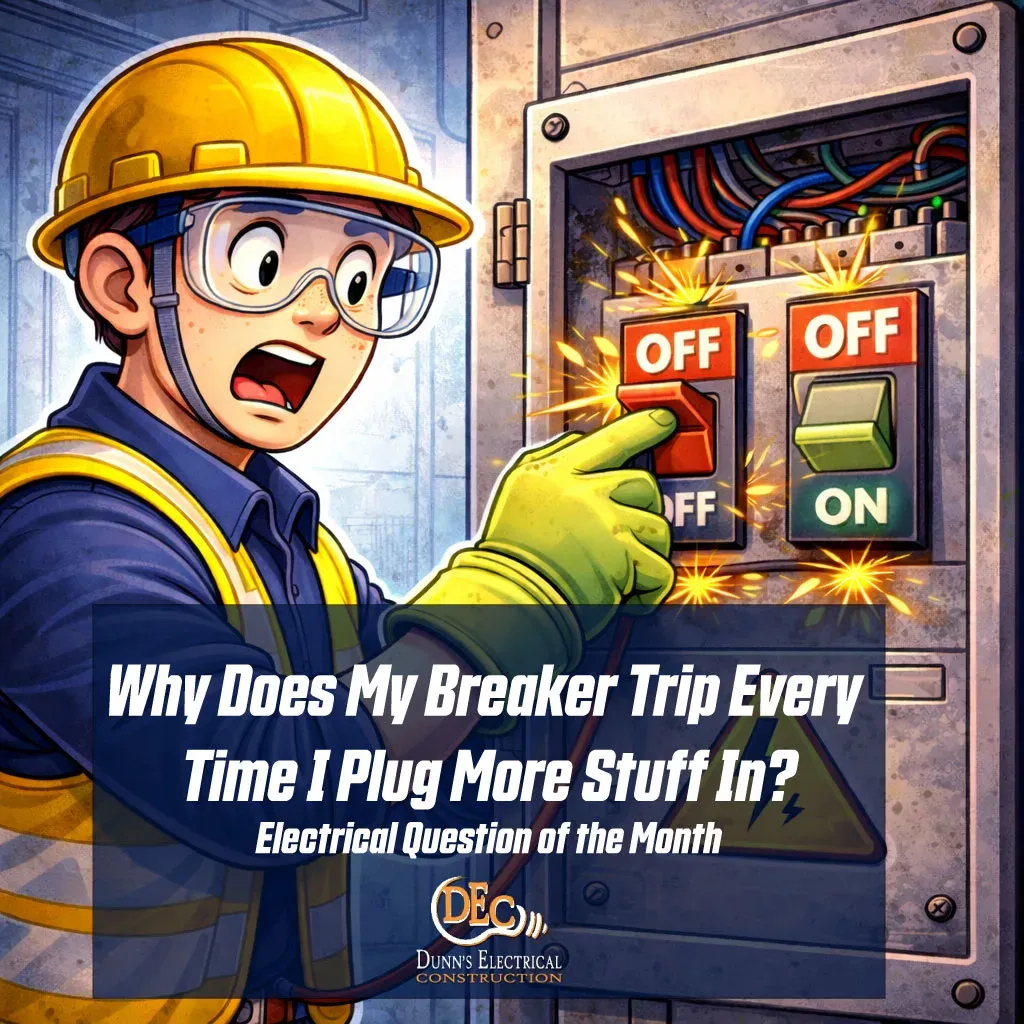
If you’ve ever turned on a microwave, coffee maker, or space heater—only to have the power suddenly shut off—you’re not alone. One of the most common questions homeowners ask is why a circuit breaker trips when multiple appliances are in use at the same time. The short answer: your electrical system is being asked to do more than it was designed to handle.
What a Breaker Is Designed to Do
Circuit breakers are safety devices. Their job is to shut off power when a circuit becomes overloaded or when something isn’t functioning safely. When too much electricity flows through a circuit, wires can overheat, increasing the risk of electrical fires. A breaker trips to stop that heat buildup before damage occurs. In other words, a tripped breaker isn’t a failure—it’s protection.
Why Multiple Appliances Cause the Problem
Most homes have multiple outlets tied to the same circuit. When you plug in several high-demand appliances at once—such as a microwave, toaster, hair dryer, or space heater—you’re stacking electrical load on that single circuit. Modern appliances often draw far more power than older systems were designed to support. Even newer homes can experience this issue if power usage increases over time. When the total demand exceeds what the circuit can safely carry, the breaker trips to prevent overheating.
Why Resetting the Breaker Isn’t a Fix
Resetting a breaker restores power, but it doesn’t solve the underlying problem. If the breaker trips again under similar conditions, it’s a sign that the circuit is consistently overloaded.
Repeated trips may indicate:
- Too many appliances on one circuit
- Wiring that isn’t sized for current usage
- A panel that’s nearing capacity
Continuing to reset the breaker without addressing the cause can allow heat damage to build up behind walls, even if the power comes back on each time.
Why This Matters for Home Safety
Electrical issues don’t always create obvious warning signs. Overloaded circuits can run hot for long periods before causing visible damage. That heat slowly breaks down insulation and connections, increasing the risk of failure or fire. Many homeowners assume that because the breaker trips, there’s no danger. In reality, frequent trips mean the system is under stress—and stress shortens the lifespan of wiring, outlets, and appliances.
What a Professional Looks For
When a licensed electrician evaluates frequent breaker trips, they don’t just look at the breaker itself. They assess the entire circuit, including load demands, wire size, panel capacity, and how power is distributed throughout the home.
Often, solutions may include:
- Redistributing loads
- Adding dedicated circuits
- Upgrading panels or wiring
These improvements help the system operate safely and reliably.
If you’re experiencing repeated breaker trips, our electrical services include troubleshooting, panel upgrades, and circuit improvements designed to keep your home safe and operating efficiently.
When to Call an Electrician
If your breaker trips often, trips without heavy appliance use, or feels warm to the touch, it’s time to have it inspected. These are signs that the system may no longer be keeping up with your home’s needs.
The Bottom Line
A breaker that trips when multiple appliances are running is your electrical system asking for attention. Addressing it early helps protect your home, your appliances, and your peace of mind. Electrical Question of the Month: If your system is telling you something, it’s worth listening.
About Dunn Electrical Construction: Dunn Electrical Construction is a licensed electrical contractor serving North Central Texas with dependable, code-compliant residential, commercial, and industrial electrical services. This blog is for informational purposes only and should not be used as a substitute for professional electrical advice or service. Always consult a licensed electrician for electrical work.